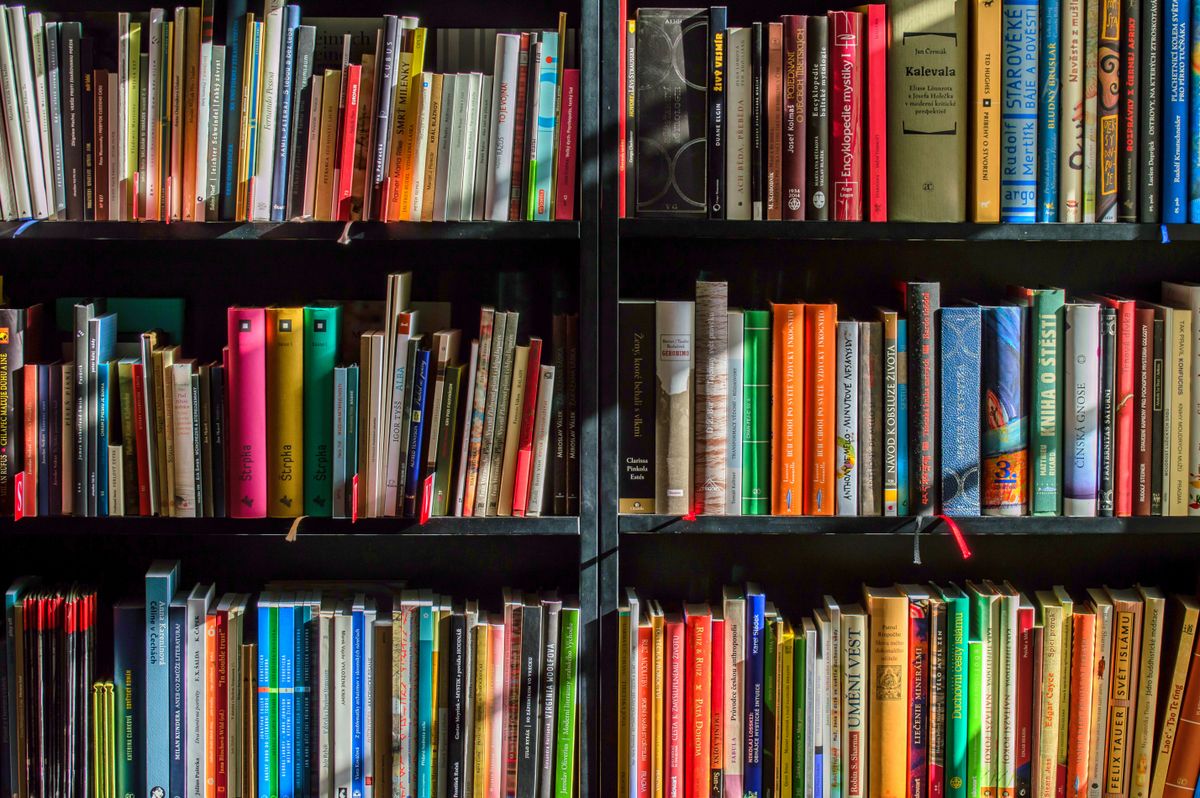
Uncle Lim opens at eight-thirty but he often unbolts the grille ten minutes early for regulars. I am not a regular in any formal sense — I buy perhaps once a month — yet he recognises my shoes on the threshold. The shop sits on a shophouse row where the bakery next door has already been warm for an hour, and the smell of butter crosses the corridor when someone opens a door. June mornings in Singapore arrive bright and close; by nine the pavement will hold heat you can feel through your soles.
Inside, the air is cooler and faintly papery. Uncle Lim switches on one tube light at a time, as if brightness should accrue gradually rather than flood the room. I nod, he nods, and I drift toward the back where the second-hand shelves lean slightly from years of browsing. This is the hour I like best: no one has yet displaced the spines I meant to inspect, and the floor still carries yesterday's arrangement of footprints.
I came looking for nothing in particular. That is usually when I find something worth keeping. A collection of harbour photographs from the nineteen-seventies, spine cracked but images intact. A slim volume of essays about walking in cities — not Singapore specifically, but the author mentions humidity and I feel seen. I pull both and set them on the small counter where Uncle Lim keeps a tin of mints and a calculator with worn buttons.
He pours kopi from a thermos he brings from home. It is a kindness he extends without comment. The cup warms my hands while I flip through the photo book standing up, because the shop has only one chair and it belongs to Uncle Lim. Through the front window I can see aunties queueing at the bakery, and a boy on a bicycle circling the block twice for no reason I can discern.

The essay volume has pencil marks in the margins — small ticks and one word circled: wait. I wonder who waited, and for what. Second-hand books carry these small inheritances. I do not mind them. They remind me that reading is rarely solitary even when you are alone in a shop before nine. Someone else's attention has already passed over these lines; mine is simply the next layer.
Uncle Lim wraps my choices in brown paper without being asked. He uses string, not tape, which feels old-fashioned in the best way. We exchange the few sentences our acquaintance requires: weather, a mention of the MRT works on the Circle Line, his daughter visiting from Melbourne next month. He does not ask what I do for a living. I appreciate that. The neighbourhood knows me as the person who buys books in the morning, and that is sufficient identity for a Saturday.
By the time I step back into the sun, the shop has its first other customer — a man in running clothes looking for travel guides. Uncle Lim will recommend something he stocked in 2019 because he remembers every title on every shelf. I walk toward the market with the paper bundle under my arm, thinking about harbour cranes and margin notes and the particular privilege of arriving before the city fully organises itself for the day.
At home I shelve the books without reading further. The morning belongs to the acquisition, not the consumption. I make a second cup of tea and leave both volumes near the desk lamp where I will open them after dinner, when the flat is quiet and the harbour wind moves the curtain. For now it is enough to know they came from that half-hour — dust in the light, kopi in a plastic cup, the shop still holding the hush of the hour before nine.